Free Hosting
Showing posts with label interesting. Show all posts

Monday, December 1, 2014

, , ,

top 7 interesting facts about Doctors

top 7 interesting facts about Doctors

Here is the top 5 interesting facts about Doctors : - 
1.        Doctor’s rigorous training ensures at a minimum a very high level of competency and professionalism.  Dr Mohammed Saed of Bradford England practiced as a doctor for over 30 years, during which time he prescribed creosote and suppositories to be taken orally, misdiagnosed everything from heart disease to a brain tumour the size of an orange. A whistle blowing pharmacist finally put an end to his practice (or should that practicing) when he prescribed cough medicine as a scalp tonic.

2.       Male doctors are best.  An analysis of almost 5,000 doctors and dentists referred to the National Clinical Assessment Service over the past eight years because of worries about their performance shows men outnumbering their female colleagues by 3-1.

3.       Older more experienced doctors are better than younger doctors. In a USA study of heart attack victims, mortality rates rose 1% for every two years since a patient’s doctor graduated from medical school.


4.       Doctors are poorly paid. The average salary for GPs is 110k, which compares well with that of a chartered accountant (senior) 100k, Architect 60k and lawyer 52k, and the glamorous newer profession of airplane pilot 63k.


5.       Doctors work long hours. A ‘journal of American medical  association’ study of 2008 saw the hours doctors work on average fell from 55 to 51 between 1996 2008, this fall in hours worked was not seen elsewhere in America professions or business ( which actually saw a rise in hours worked during that period)

6.       Young doctors are no less competent than their older colleagues. Some might think that newly trained doctors would bring many benefits with them. Fresh from medical school, highly motivated, full of enthusiasm, up to date with the latest medical techniques,  and above all well supervised ( therefore less prone to error) . In fact according to an Imperial College London study, newly trained doctors hitting the wards in august cause an 8% rise in mortality.

7.       Doctors are good for you. A persistent but puzzling fact first identified in 1978, the more doctors in a given community the higher the mortality rate. This statistical fact was confirmed by a truly monumental study (Cornel University 2001) which included; 47 Japanese prefectures, all 3,000 + counties of the USA, and 29 (mostly) European countries. The bad news was it found the more doctors in your community the more likely you were to die (the good news ,if you can call it that, was this increased mortality rate was due to a complex combination of factors, many of the centred on the deleterious effects of urban living and not the lethality of doctors).
Publisher: moath - 1:13 PM

Saturday, July 26, 2014

, , ,

top 5 world war 2 facts

world war 2 facts


1- Percy Spencer (USA) invented the microwave oven in 1945, using new technology developed for military defence during the Second World War.

2- Radar was first used to detect enemy aircraft during the Second World War.

3- The first programmable computer, Colossus, was built in England during the Second World War to crack coded enemy messages.All 14 Colossus computers were destroyed after the war and the British government denied they had ever existed.

4- A chemical found in asparagus attracts fish. During the First World War,American soldiers were issued with asparagus so that if they were stranded near water they could eat the asparagus, urinate in the water and catch some fish to eat!

5- In the First World War, soldiers used the super-absorbent sphagnum moss to bandage their wounds. It can soak up four times as much blood as cotton bandages, but was a disgusting colour, like dried pus!
Publisher: moath - 7:58 AM

Tuesday, May 13, 2014

, , , ,

10 Amazing and Interesting Facts About The Human Body

The human body is the entire structure of a human organism, and consists of a head, neck, torso, two arms and two legs.
By the time the human reaches adulthood, the body consists of close to 50 trillion cells, the basic unit of life. These cells are organized biologically to eventually form the whole body.
The human body is the only machine for which there are no spare parts. Here is a collection of 10 Amazing and Interesting Facts About The Human Body.

1. The brain doesn't feel pain: Even though the brain processes pain signals, the brain itself does not actually feel pain.
2. 80% of the brain is water: Instead of being relatively solid, your brain 80% water. This means that it is important that you remain properly hydrated for the sake of your mind.
3. Your brain comes out to play at night: You’d think that your brain is more active during the day, when the rest of your body is. But it’s not. Your brain is more active when you sleep.
4. Adrenaline gives you super strength: Yes, with the proper response in certain situations, you really can lift a car.
5. Your hearing decreases when you overeat: When you eat too much food, it actually reduces your ability to hear. So consider eating healthy — and only until you are full.
6. Babies always have blue eyes when they are born: Melanin and exposure to ultraviolet light are needed to bring out the true color of babies’ eyes. Until then they all have blue eyes.
7. Throughout your life, the amount of saliva you have could fill two swimming pools: Since saliva is a vital part of digestion, it is little surprise that your mouth makes so much of it.
8. A sneeze can exceed 100 mph: When a sneeze leaves your body, it does so at high speeds — so you should avoid suppressing it and causing damage to your body.
9. You are taller in the morning: Throughout the day, the cartilage between your bones is compressed, making you about 1 cm shorter by day’s end.
10. It takes more muscles to frown than to smile: Scientists can’t agree on the exact number, but more muscles are required to frown than to smile.

Some More Facts About The Human Body

Your tongue is the strongest muscle in your body: Compared to its size, the tongue is the strongest muscle. But I doubt you’ll be lifting weights with it.
Appendix is basically useless: While it does produce some white blood cells, most people are fine with anappendectomy.
You can’t tickle yourself: Go ahead. Try to tickle yourself.
Being right-handed can prolong your life: If you’re right-handed, you could live up to nine years longer than a lefty.
The focusing muscles of the eyes move around 100,000 times a day: To give your leg muscles the same workout, you would need to walk 80km (50 miles) every day.
In 30 minutes, the average body gives off enough heat (combined) to bring a half gallon of water to boil.
I hope you have liked these pretty weird facts, if you have more strange or odd facts, please do share them with us in the comments below.

read more :

10 Interesting Facts Of Our Body (Part-2)

Publisher: moath - 12:44 AM
, , , , ,

10 Interesting Facts Of Our Body (Part-2)

Check out the strange Secret of our body.
10 Interesting Facts Of Our Body (Part-2) (1)
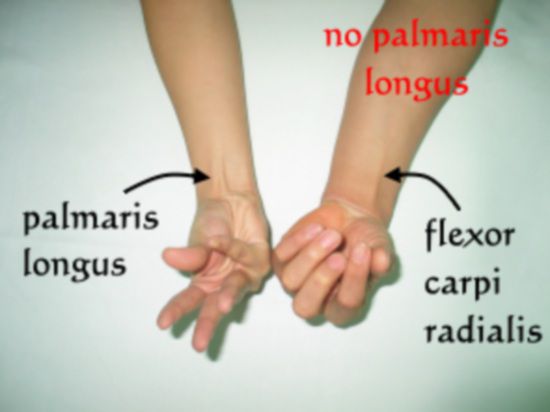
1. 15% of people are missing the long palm muscle. absence of this tendon does not affect the holding power. But when you need to transplant, it is a good source – a kind of spare part in the human body. Other mammals that same tendon responsible for deflation claws. Apparently, therefore, it does not exist in some people – the need to produce claws in our species is absent. To check whether you have it, collect all five fingers to pinch and bend the wrist – the tendon clearly discernible in the wrist area, provided that it is available.
10 Interesting Facts Of Our Body (Part-2) (2)

10 Interesting Facts Of Our Body (Part-2) (3)

10 Interesting Facts Of Our Body (Part-2) (4)
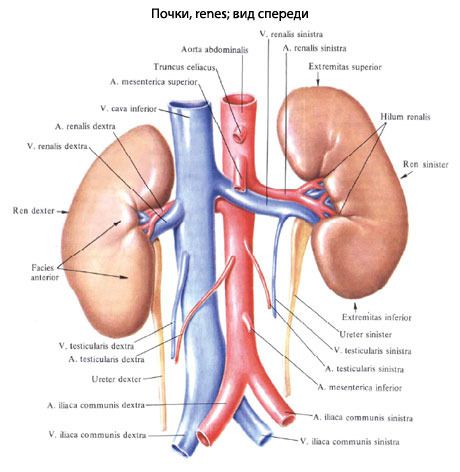
3. Your ovaries and testes were born in the same place, and kidneys. ‘s why, if you will kick someone in the balls, the opponent also feel pain in your lower back. Yet, not necessarily to check it yourself.
10 Interesting Facts Of Our Body (Part-2) (5)
4. Your right above the left kidney. above left kidney, right 2.5 cm, because of the right kidney hangs liver. . This is the physiological structure of the kidneys in humans. For both men and women. Males kidney larger in size than the female.


10 Interesting Facts Of Our Body (Part-2) (6)
5. Without a meal blood sugar can keep within the normal 2 – 3 days. Normal blood sugar equivalent teaspoon dissolved in the entire volume of blood, so it’s actually quite a small amount. When blood sugar drops to a minimum glucose would be enough to supply the body’s cells. This condition runs in the process of converting stored liver glycogen into glucose, glycogen storage while not fully exhausted. You feel out of his mouth, “the smell of acetone.”
10 Interesting Facts Of Our Body (Part-2) (7)
6. In the adult human bones less than a child. At birth, our body can count more than 300 bones, but as they grow older, some bones fuse together, and eventually, they become 206.

10 Interesting Facts Of Our Body (Part-2) (8)
7. People – the only mammals, unable to breathe and swallow at the same time. For animals combination of breathing and swallowing is not a problem. Children under the age of 9 months and are capable of it – infants during breastfeeding can breathe.After this age, our vocal apparatus is below, so that we become capable of producing a wide range of different sounds, forming speech. However, after that we can no longer breathe and swallow at the same time.

10 Interesting Facts Of Our Body (Part-2) (9)
8. The shape of the female nipple can learn about the presence of her children. Typically, nulliparous women nipple has a tapered shape, parous – cylindrical. It is surrounded by the so-called areola diameter of 3-5 centimeters. Pigmentation of the skin of the nipple and areola is different from the rest of the skin – it is noticeably darker. In nulliparous women – pinkish red to dark red, parous – brownish.
9. The human body consists of an average of 7000000000000000000000000000 atoms. After seven zeros is 27, about the atoms in the human body weight of 70 kilograms.
10. Regardless of our age, every atom in our bodies over us billions of years. Hydrogen atoms have arisen in consequence of the “big bang”, about 13.7 billion years ago. Heavier carbon atoms (representing 18.5% of our body) and oxygen (65%) were born inside stars and were scattered throughout the universe, after the lights died.
10 Interesting Facts Of Our Body (Part-2) (12)


Publisher: moath - 12:43 AM

Saturday, April 26, 2014

, , , ,

What is coral?

What is coral?

While corals may look like rocks and share several characteristics of plants, they are in fact animals. To be exact they are aquatic marine invertebrates (known as polyps) that live in the warm shallows of the clear coastal waters located around the world. A huge number of marine organisms make their home among the corals, making reefs some of the most abundant and varied habitats on Earth. Because the nutrients on which plankton need to feed dissolve better in deeper, cooler water, the warmer layers become a less attractive spot for the huge numbers of floating plankton to occupy. Therefore, the upper shallows remain
warm and clear – the ideal living conditions for microscopic algae, which use sunlight to combine carbon dioxide and water to create their own food source, which they share with their coral.

Corals live in partnership with single-celled zooxanthellae algae,
which are also responsible for the bright colours. If the algae die the coral will turn white, a damaging effect known as coral bleaching. Like jellyfish, corals are cnidarians, except they are rooted to the spot by a tube attached to a surface (usually rock), rather than floating freely like jellyfish. Cnidarians consist of a simple body, featuring a central mouth opening that is surrounded by stinging tentacles. The coral polyp is
the soft individual organism that forms from a single-celled alga and lives within a larger community of similar polyps called a colony.

They use calcium and a variety of other minerals in the seawater – together with the food waste they produce – to construct their own protective calcium carbonate skeleton shelters in which to live. When coral dies,
the hard, chalky skeletal remains are left behind and new polyps will grow on top of these. Sedimentary limestone rock is formed when the coral skeletons are compacted over many thousands of years.
Over hundreds of thousands of years, a colony of polyps can grow big enough to link up with other colonies to form a large coral reef.
Publisher: moath - 6:05 AM
, , ,

Why is the coast eroding?

Water is not given enough credit for the role it plays in shaping Earth. Tectonic plates and volcanic eruptions are often cited as the culprits for most land features, but it is water and wave action that shapes our world’s coastlines. When a wave crashes on the shore it carries sediments that are suspended in the water, and it pushes larger sediments along the ground too. 

Why is the coast eroding?
When a wave recedes it also takes sediment with it, but rarely at an equal
rate. If a wave deposits more sediment than it takes away then this sediment builds up, causing coastlines to extend. Conversely, when more sediment is being removed than added, the coastline recedes or
erodes. Coastal erosion is responsible for some of the most amazing landforms we know today, from the Twelve Apostles in Australia to the White Cliffs of Dover in England. The type of coastline that is
created from erosion varies greatly depending on any number of factors, including the strength of the wave action and wind, the sediment composition of the coastline and the types
of nearby rock. 
Coastal erosion is a very slow process, taking hundreds of years, but scientists believe that climate change is speeding things up. Climate change has caused a rise in sea levels and storm frequency and severity – both of which play a key role in erosion. Indeed, the UK’s Environment Agency estimates that the British coastline could erode from 67-175 metres (220-575 feet) over the next 100 years.
Publisher: moath - 6:01 AM

Tuesday, October 29, 2013

, ,

Strange Facts You Should Know About Cats!!!

Cats are lovely,and they are really a good partner for spending free time. You can smile watching them performing different actions in its own way. I love cats but I don’t have patience to handle tidiness in home with it.Well,most of you must be having a cat at their home.
Yeah,its a fun. But do you have a complete knowledge of your cat’s lifestyle? If no,then this one is for you. I am giving you some not so well known facts about cats.Have an eye and write your comments if you like my work.
  • A cat lover is called an Ailurophilia (Greek: cat+lover).

  • A group of cats is called a “clowder.”
  • Female cats tend to be right pawed, while male cats are more often left pawed. Interestingly, while 90% of humans are right handed, the remaining 10% of lefties also tend to be male.

  • A cat can’t climb head first down a tree because every claw on a cat’s paw points the same way. To get down from a tree, a cat must back down.
  • Cats make about 100 different sounds. Dogs make only about 10.
  • A cat’s brain is biologically more similar to a human brain than it is to a dog’s. Both humans and cats have identical regions in their brains that are responsible for emotions.
  • There are more than 500 million domestic cats in the world, with approximately 40 recognized breeds.
  • Approximately 24 cat skins can make a coat.
  • A cat can jump up to five times its own height in a single bound.
  • Some cats have survived falls of over 65 feet (20 meters), due largely to their “righting reflex.” The eyes and balance organs in the inner ear tell it where it is in space so the cat can land on its feet. Even cats without a tail have this ability.
  • A cat rubs against people not only to be affectionate but also to mark out its territory with scent glands around its face. The tail area and paws also carry the cat’s scent.
  • Researchers are unsure exactly how a cat purrs. Most veterinarians believe that a cat purrs by vibrating vocal folds deep in the throat. To do this, a muscle in the larynx opens and closes the air passage about 25 times per second.
  • When a family cat died in ancient Egypt, family members would mourn by shaving off their eyebrows. They also held elaborate funerals during which they drank wine and beat their breasts. The cat was embalmed with a sculpted wooden mask and the tiny mummy was placed in the family tomb or in a pet cemetery with tiny mummies of mice.
  • In 1888, more than 300,000 mummified cats were found an Egyptian cemetery. They were stripped of their wrappings and carted off to be used by farmers in England and the U.S. for fertilizer.
  • Most cats give birth to a litter of between one and nine kittens. The largest known litter ever produced was 19 kittens, of which 15 survived.
  •  In the original Italian version of Cinderella, the benevolent fairy godmother figure was a cat.
  •  In Holland’s embassy in Moscow, Russia, the staff noticed that the two Siamese cats kept meowing and clawing at the walls of the building. Their owners finally investigated, thinking they would find mice. Instead, they discovered microphones hidden by Russian spies. The cats heard the microphones when they turned on.
  • A cat’s jaw can’t move sideways, so a cat can’t chew large chunks of food.
  • A cat’s back is extremely flexible because it has up to 53 loosely fitting vertebrae. Humans only have 34.
  • Approximately 1/3 of cat owners think their pets are able to read their minds.
  • The little tufts of hair in a cat’s ear that help keep out dirt direct sounds into the ear, and insulate the ears are called “ear furnishings.”
  • The ability of a cat to find its way home is called “psi-traveling.” Experts think cats either use the angle of the sunlight to find their way or that cats have magnetized cells in their brains that act as compasses.
  • All cats have claws, and all except the cheetah sheath them when at rest.
  • Two members of the cat family are distinct from all others: the clouded leopard and the cheetah. The clouded leopard does not roar like other big cats, nor does it groom or rest like small cats. The cheetah is unique because it is a running cat; all others are leaping cats. They are leaping cats because they slowly stalk their prey and then leap on it.
  • A cat usually has about 12 whiskers on each side of its face.
  • A cat’s eyesight is both better and worse than humans. It is better because cats can see in much dimmer light and they have a wider peripheral view. It’s worse because they don’t see color as well as humans do. Scientists believe grass appears red to cats.
  • A cat’s hearing is better than a dog’s. And a cat can hear high-frequency sounds up to two octaves higher than a human.
  • A cat can travel at a top speed of approximately 31 mph (49 km) over a short distance.
  • Smuggling a cat out of ancient Egypt was punishable by death. Phoenician traders eventually succeeded in smuggling felines, which they sold to rich people in Athens and other important cities.
  • The earliest ancestor of the modern cat lived about 30 million years ago. Scientists called it theProailurus, which means “first cat” in Greek. The group of animals that pet cats belong to emerged around 12 million years ago.
  • The biggest wildcat today is the Siberian Tiger. It can be more than 12 feet (3.6 m) long (about the size of a small car) and weigh up to 700 pounds (317 kg).
  • The smallest wildcat today is the Black-footed cat. The females are less than 20 inches (50 cm) long and can weigh as little as 2.5 lbs (1.2 kg) .
  • Every year, nearly four million cats are eaten in Asia.
  •  On average, cats spend 2/3 of every day sleeping. That means a nine-year-old cat has been awake for only three years of its life.
  • Unlike dogs, cats do not have a sweet tooth. Scientists believe this is due to a mutation in a key taste receptor.
  • The oldest cat to give birth was Kitty who, at the age of 30, gave birth to two kittens. During her life, she gave birth to 218 kittens.c
  • The most traveled cat is Hamlet, who escaped from his carrier while on a flight. He hid for seven weeks behind a pane. By the time he was discovered, he had traveled nearly 373,000 miles (600,000 km).
  • The most expensive cat was an Asian Leopard cat (ALC)-Domestic Shorthair (DSH) hybrid named Zeus. Zeus, who is 90% ALC and 10% DSH, has an asking price of £100,000 ($154,000).
  • The cat who holds the record for the longest non-fatal fall is Andy. He fell from the 16th floor of an apartment building (about 200 ft/.06 km) and survived.
  • The richest cat is Blackie who was left £15 million by his owner, Ben Rea.
  • The claws on the cat’s back paws aren’t as sharp as the claws on the front paws because the claws in the back don’t retract and, consequently, become worn.
  • There are up to 60 million feral cats in the United States alone.
Publisher: moath - 2:15 PM
, ,

Some Facts that you might not know about Lions!!!

 The lion is a magnificent animal that appears as a symbol of power, courage and nobility on family crests, coats of arms and national flags in many civilizations. The lion is one of the four big cats in the genus Panthers, and a member of the family Filedae. With some males exceeding 250 kg in weight, it is the second-largest living cat after the tiger. 
Lion (1)The lion is the tallest of all living cats. You all must be thinking what is new in this, we all know about lions. Their lifestyle, their behavior and their nature is known to us. But i am sure most of you must be unaware about the facts about the lions which are given below.  Learn about lion behavior, how fast they can run, where they are found, how many lions are usually in a pride, the male’s mane, lioness differences and more.
  • Although lions appear to be all one color, closer assessment reveals patches of white inside their legs and on their bellies.
  • A lion’s roar can be heard from as far as 5 miles away.
  • Each adult lion needs 10-15 pounds of meat every day.
  • Lions are  featured in the Puranic texts of Hinduism were Narasimaha (“man-lion”) a half man, half lion incarnation of Vishnu is worshiped by his devotees and saved the child devotee Prahlada from his father, the evil demon king Hiranyakashipu.
  • Lions have hair rather than fur. Hair is defined as a single-layered, thin coat and fur is a double-layered, insulated coat.
  • When lions breed with tigers the resulting hybrids are known as tigers and tigons. There are also lion and leopard hybrids known as leopards and lion and jaguar hybrids known as jag lions.
  • When an animal is killed, lions will eat virtually every part of it–the skin, meat, intestines, even the eyeballs.
  • Lion (3)  But they don’t eat the stomach. It must smell bad to lions because they often bury it.
  • The lions cubs are very vulnerable to predators such as hyenas, leopards and black-backed jackals. At three months old they start displaying stalking behavior although they don’t begin hunting until they are about 1. It takes another year until they until they begin to hunt efficiently.
  • Around the same time they leave the comfort of their mother.Lions remain inactive for up to 20 hours each day. They wait until the coolest, darkest times to hunt.
  • Hunting generally is done in the dark by the lionesses. They often hunt in groups of two or three, using teamwork to stalk, surround, and kill their prey.
  • Lion (4)  Lionesses aren’t the most successful of hunters, because they usually score only one kill out of several tries. After the kill the males usually eat first, lionesses next—and the cubs get what’s left.
  • Unlike most cats, lions are excellent swimmers.
  • A male lion marks the territory of his pride by spraying a mixture of urine and glandular secretions on tree trunks and bushes.
  • Most lions drink water daily if available, but can go four or five days without it.
  • Lions in captivity live twice as long as those in the wild (25-30 years in captivity; 15 in the wild).
  • For the lion and lioness couple, it’s all about quantity, not quality. Though romps usually only last for 10 seconds, the process is repeated up to 40 times a day.
  • A lion can run up to a maximum speed of 80 kilometers per hour.
  • Lion (5)The lion is the only member of the cat family with a tasseled tail, which serves a purpose beyond aesthetics. It’s often used to signal to other members of the pride, with messages ranging from directional, “this way” commands to flirtatious, “come hither” invitations.
  • Lions are the only social cats, living in groups called prides.
  • A pride comprises of interconnected females and one to four adult males ~ young male lions are kicked out of the pride when they show signs of maturity.
Lion (6)
Publisher: moath - 2:13 PM

Friday, October 18, 2013

, , , ,

Oddy Facts of Life

You are gonna laugh today after reading these odd facts of life….have a look and increase your knowledge and enjoy….
ODDYY Facts of Life (2)      ODDYY Facts of Life (3)   ODDYY Facts of Life (4)   ODDYY Facts of Life (5)   ODDYY Facts of Life (6)   ODDYY Facts of Life (7)   ODDYY Facts of Life (8)   ODDYY Facts of Life (9)   ODDYY Facts of Life (10)   ODDYY Facts of Life (11)   ODDYY Facts of Life (12)   ODDYY Facts of Life (13)   ODDYY Facts of Life (14)   ODDYY Facts of Life (15)   ODDYY Facts of Life (16)   ODDYY Facts of Life (17)   ODDYY Facts of Life (18)   ODDYY Facts of Life (19)   ODDYY Facts of Life (20)   ODDYY Facts of Life (21)   ODDYY Facts of Life (22)   ODDYY Facts of Life (23)   ODDYY Facts of Life (24)   ODDYY Facts of Life (25)   ODDYY Facts of Life (26)
Publisher: moath - 5:46 PM